Restaurant digital signage gives restaurants a faster, cleaner, and more flexible way to display menus, promotions, and brand messaging inside the venue. Instead of relying on printed materials, restaurants can update what customers see in real time and create a more polished in-store experience.
Short Answer
Restaurant digital signage helps restaurants communicate more clearly, update menus and offers instantly, and create a more engaging customer experience. It is commonly used for digital menu boards, promotional displays, brand visuals, and time-sensitive messaging across one or many locations.
TL;DR
- Restaurant digital signage helps replace static printed materials with dynamic, updateable displays.
- It makes menu changes, pricing updates, and promotions much easier to manage.
- Digital menu boards can improve clarity while also helping with upselling.
- Promotional displays allow restaurants to highlight offers at the right time of day.
- Signage works best when it fits the overall feel of the venue, including music and interiors.
- Centralised control is especially useful for restaurant groups and multi-location brands.
What Is Restaurant Digital Signage and How Does It Work?
Restaurant digital signage refers to the use of digital displays inside a restaurant to show menus, offers, brand visuals, and practical information.
These displays may appear in:
- ordering counters
- dining areas
- entrance zones
- waiting areas
- drive-thru lanes
The biggest difference from printed material is flexibility. Instead of replacing posters or menus by hand, restaurants can make changes instantly and keep messaging current across one site or many.
For growing brands, restaurant digital signage also helps maintain consistency from one outlet to the next.
Why Restaurants Use Digital Signage
Restaurants use digital signage because it solves several day-to-day problems at once while also improving how the space looks and feels.
Faster Updates
Menus, pricing, and offers can be changed quickly without printing new materials. That’s especially useful for:
- seasonal items
- limited-time offers
- price updates
- sold-out dishes
- short-term campaigns
Better Presentation
Well-designed displays make menus and promotions easier to notice and more visually appealing. Good imagery and movement can bring more attention to specific items than static print ever could.
Stronger Promotions
Restaurants can rotate different offers throughout the day instead of trying to fit everything onto one poster or board. That keeps promotions more visible without making the space feel cluttered.
Better Brand Consistency
For chains and multi-location operators, central control makes it much easier to keep menus, offers, and branding aligned across every site.
For a broader industry perspective, the Digital Signage Federation is a useful reference point on how digital signage is used across commercial environments.
Digital Menu Boards
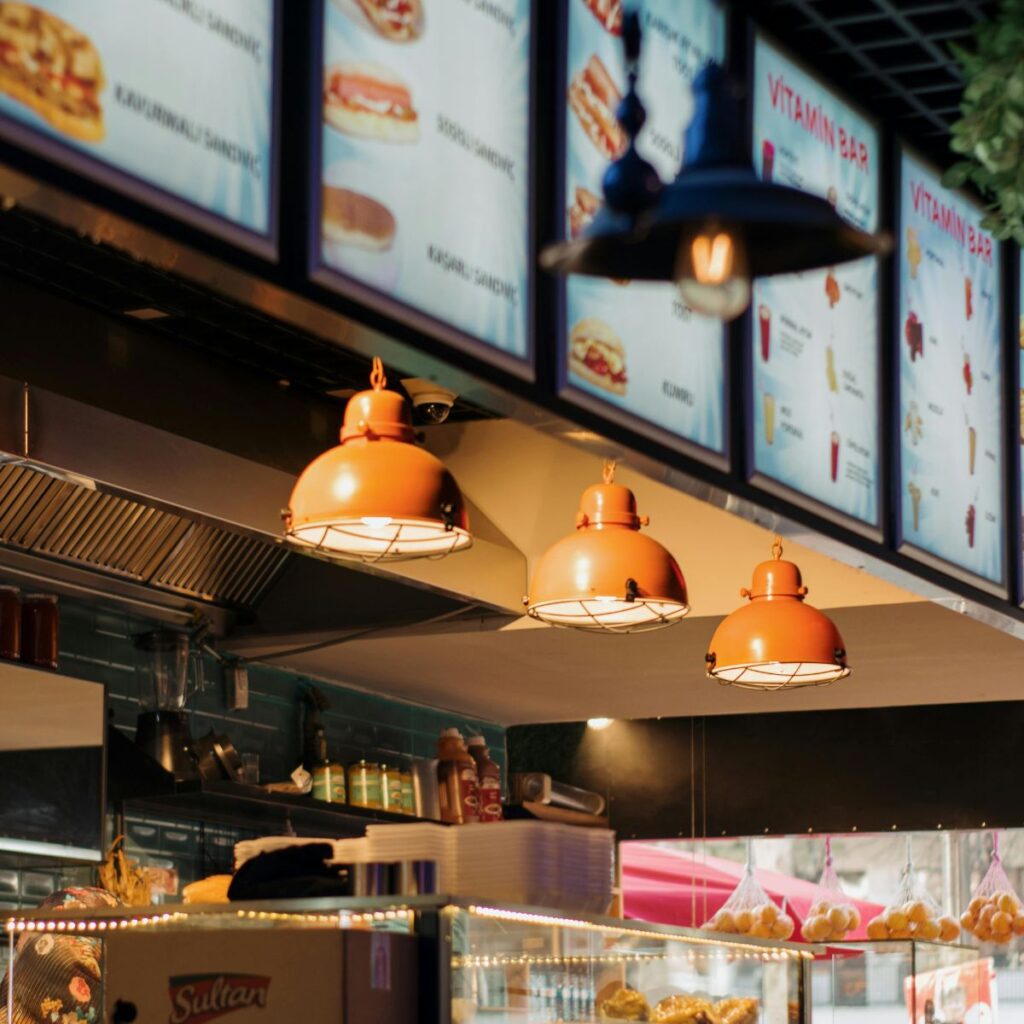
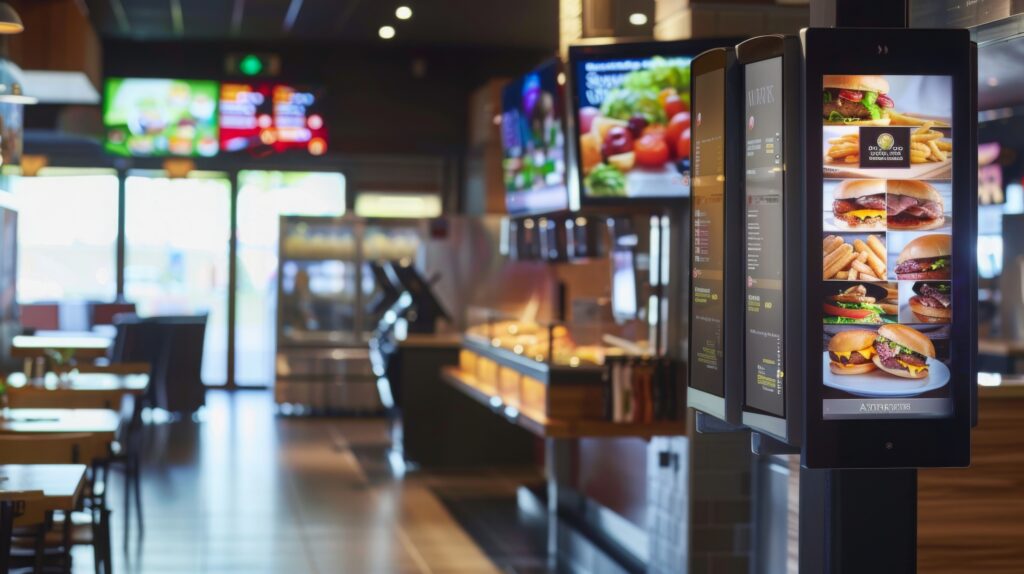
Digital menu boards are one of the most common and useful applications of restaurant digital signage.
They can display:
- menu items
- prices
- combos
- add-ons
- featured products
- limited-time offers
Why Digital Menu Boards Work Well
They help restaurants:
- update menus without reprinting
- manage changing items more easily
- highlight higher-margin products
- present menus in a cleaner, more modern way
They’re especially useful in:
- quick service restaurants
- cafés
- takeaway counters
- food courts
- fast-casual formats
For businesses with frequent changes or multiple locations, digital menu boards are often one of the clearest practical benefits of restaurant digital signage.
Promotional Displays
Menus are only one part of the opportunity. Restaurants can also use digital displays to push offers and drive additional sales.
Common examples include:
- new product launches
- combo deals
- limited-time offers
- seasonal campaigns
- upsell messages
- desserts, beverages, or add-ons
Because scheduling is built in, restaurants can show different promotions at different times of day. That means breakfast messaging in the morning, lunch offers during peak hours, and evening promotions later on.
This is one of the reasons digital signage for restaurants is more useful than static print. It allows the message to match the moment.
Integrating Signage with Ambience
This is where things get more interesting. Screens work best when they don’t feel isolated from the rest of the venue.
They should fit with:
- the interiors
- the lighting
- the pace of service
- the visual identity
- the music
A premium restaurant might use subtle motion, restrained layouts, and elegant visuals. A faster-paced casual concept might use brighter graphics and more energetic promotional messaging. A lounge-style venue may want slower visual movement and a calmer overall feel.
That’s why music and visual communication are really part of the same in-store experience ecosystem. If the visuals say one thing and the atmosphere says another, the space feels disconnected. When both are aligned, the restaurant feels more deliberate and more on-brand.
If you’re looking at the wider experience, this is where restaurant digital signage connects naturally with background music for business.
Content Strategies for Restaurant Digital Signage
The platform matters, but what really determines success is how the content is planned and presented.
Keep It Clear
People need to understand menus and messages quickly. If the layout is crowded or overloaded with text, the display becomes harder to use.
Use Strong Visuals
Food imagery should be clear, appetising, and professionally presented. Poor-quality visuals can make even good products look less appealing.
Prioritise the Right Items
Not everything needs the same level of attention. Focus more strongly on:
- best-sellers
- high-margin items
- current offers
- seasonal highlights
- products you want to push
Schedule by Time of Day
This is one of the simplest ways to improve results.
For example:
- breakfast items in the morning
- lunch combos during midday rush
- snack offers in the afternoon
- desserts or beverages later in the day
Stay Consistent with the Brand
Colours, fonts, tone, animation style, and imagery should all feel like part of the same brand system. This matters even more for restaurant groups operating across multiple sites.
A strong restaurant digital signage strategy is not just about putting menus on screens. It’s about presenting the right information in the right way at the right time.
For examples of commercial digital signage solutions and how businesses deploy them, manufacturer resources can also be useful background reading.
Why Restaurant Digital Signage Matters for Multi-Location Brands
For single-site restaurants, the benefits are already clear. For chains, the value becomes even greater.
With centralised control, teams can:
- update menus across multiple locations from one dashboard
- launch campaigns instantly
- maintain visual consistency
- reduce manual work at store level
- react quickly to local or regional changes
That’s one of the biggest reasons multi-site operators invest in restaurant digital signage. It improves both efficiency and brand control at the same time.
Common Mistakes Restaurants Make
The technology itself is straightforward. Most problems come from how it’s used.
Treating It Like a Static Board
Some restaurants install displays but rarely update them. That removes much of the benefit. The real value is in flexibility and timely changes.
Showing Too Much at Once
If every item, offer, and message is fighting for attention, customers take in less, not more.
Using Weak Visuals
Low-resolution images, poor layout choices, or badly designed creative can make the restaurant feel less polished.
Ignoring Timing
The same menu emphasis and promotional mix won’t always make sense all day long. Scheduling matters.
Letting It Drift Away from the Overall Experience
Screens should feel like part of the venue, not an add-on. If they don’t match the atmosphere, they can feel visually noisy or off-brand.
FAQs
What is restaurant digital signage?
Restaurant digital signage is the use of digital displays inside a restaurant to show menus, promotions, offers, and brand messaging in a more flexible and updateable format than printed materials.
Is digital signage worth it for restaurants?
Yes. It makes updates faster, reduces reliance on print, improves presentation, and helps restaurants manage promotions more effectively.
What should restaurants show on digital displays?
Most restaurants use them for menus, pricing, promotional offers, product highlights, brand visuals, and seasonal messaging.
Can restaurant digital signage increase sales?
It can. Highlighting selected items, combos, add-ons, or limited-time offers more clearly can influence purchasing decisions and improve average order value.
How is restaurant digital signage managed across multiple locations?
Most systems use a central dashboard, allowing operators to update displays remotely across one or many sites.
Conclusion
Restaurant digital signage is more than a digital version of a printed menu. Used properly, it becomes a practical tool for communication, promotion, consistency, and brand presentation.
It helps restaurants update information quickly, highlight the right products at the right times, and create a cleaner, more engaging customer experience inside the venue.
And when it’s planned alongside music, interiors, and the overall atmosphere, it becomes part of a much bigger in-store experience strategy rather than just another screen on the wall.