
Articles & Insights
Music Licensing in the Netherlands for Business: Why MijnLicentie Is the Starting Point
TL;DR
If your business in the Netherlands plays music that customers or employees can hear, you should usually start with MijnLicentie. It often gives Dutch venues a combined route into the BumaStemra and Sena side of ordinary business music use, but venues should still check the actual workplace and public-access rules that apply to them.
Music licensing in the Netherlands for business questions now matter for restaurants, bars, shops, salons, hotels, gyms, offices, and other workplaces where music forms part of the customer or staff environment.
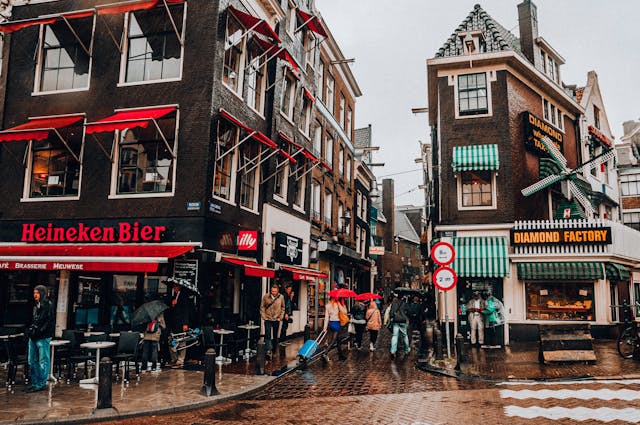
Why music licensing in the Netherlands for business is clearer than it first looks
The Netherlands is a market where the legal structure can sound more complicated than the customer journey feels. In practical terms, many Dutch venue operators can start with MijnLicentie rather than trying to work out on day one how BumaStemra and Sena relate to each other.
That’s useful because the Dutch system still reflects more than one rights layer, but the front end has been designed to make ordinary business use easier to manage.
What Dutch venues usually need to understand
At a high level, the Dutch position is that music use in business isn’t automatically private use just because it happens indoors. If customers or employees can hear the music, licensing is often triggered. That matters for restaurants, bars, shops, salons, hotels, gyms, offices, waiting areas, treatment spaces, and similar environments.
In many background music Netherlands situations, the safest practical assumption is that music in a business setting usually needs checking before playback begins.
The key practical point is that a Dutch venue should not begin from the assumption that ‘it’s just background music’. It should begin from the assumption that music in a business setting usually needs checking.
Why MijnLicentie matters
MijnLicentie is important because it gives many businesses a more user-friendly front-end route. Instead of forcing a venue to begin with a split rights analysis, it gives a combined starting point for common venue uses.
For many ordinary uses, BumaStemra Sena business music licensing is approached through a clearer customer-facing route than venue operators might expect from the underlying rights structure.
That doesn’t erase the underlying roles of BumaStemra and Sena, but it does make it much easier for a venue operator to figure out what to do next.
The office exception point that businesses often miss
The Netherlands is also a good reminder that the answer isn’t always a blunt yes-or-no. Dutch public guidance includes narrower outcomes for some purely internal workplaces and also notes that there can be no licence requirement where fewer than three full-time employees are involved in certain workplace-only situations.
That’s why the best Dutch question isn’t just ‘Do businesses need a licence?’ It’s ‘Who can hear the music, is the area public or staff-only, and does the workplace fall within any narrower carve-out?’
Music licensing Netherlands business: what Dutch venues should check in practice
- Are customers, guests, or employees able to hear the music?
- Is the space a public-access area, a staff-only workspace, or a mix of both?
- Is the venue using ordinary background music, or something more featured?
- Is the source a personal streaming account, broadcast content, stored files, or a commercial supplier?
In practice, many businesses are really trying to identify the right public music licence Netherlands route for the way the music is being used in the venue.
What sits outside the ordinary background-music question
As in other countries, Dutch venues should separate ordinary on-site playback from things like advertising video, social media content, copied music files for broader use, or other uses that raise different rights questions. A venue can be fully organised on background music and still need extra permissions for other commercial uses of music.
Why this market matters for the wider Europe conversation
The Dutch system is useful because it shows how a country can keep a layered rights structure while still making the customer-facing route more manageable. That’s exactly the sort of model venue operators should look for elsewhere in Europe instead of assuming every country works like its neighbour.
The safest approach to music licensing Netherlands business issues is to confirm who can hear the music, whether the space is public or purely internal, and whether the available route actually matches the venue’s use case.
FAQs
Is MijnLicentie the best first stop for most Dutch venues?
Usually, yes. It’s the clearest customer-facing starting point for many everyday business uses.
Does every office need a licence?
Not automatically. Dutch guidance includes narrower outcomes for some workplace-only situations, which is why offices should check the actual facts instead of making assumptions either way.
If customers can hear the music, should I assume I need to check?
Yes. That’s the safest practical assumption in the Dutch market.
What does music licensing Netherlands business usually involve?
In practice, it usually means checking whether music is being heard in a public or workplace setting, identifying whether any narrower workplace carve-out applies, and then using the available Dutch licensing route that matches the actual use.
Disclaimer
This post is intended as general information only and is not legal advice. Music licensing requirements can vary by country, venue type, and use case, and they may change over time. Before playing music in your venue, check directly with the relevant licensing organisations or authorised bodies in your country to confirm what permissions your business needs.
 English
  French
  German
  Spanish
  Italian
  Dutch
Dutch  Arabic